World Cup Official Match Balls: A History from Telstar to Trionda
At every World Cup, the official match ball is one of the most closely watched stars on the pitch. Since 1970, Adidas has supplied the official match ball for every edition of the tournament, stringing together more than half a century of World Cup memories through a series of distinctive designs. This article presents only widely verifiable facts, tracing the evolution of the World Cup match ball and the stories behind it.
The Starting Point: Telstar, 1970
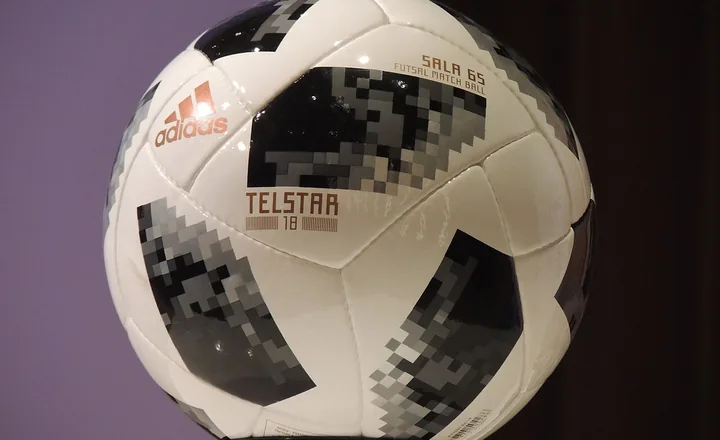
The 1970 World Cup in Mexico was the first to be broadcast worldwide on television, and Adidas marked the occasion with the Telstar. It used a 32-panel structure of 12 black pentagons and 20 white hexagons, and its black-and-white colouring was chosen precisely to make the ball easier to see on the black-and-white televisions of the era. That iconic look proved hugely influential and remains the standard image of a “football” in many people’s minds.
The Tango Era: A Design Legacy
At the 1978 World Cup in Argentina, Adidas introduced the Tango, named after the country’s national dance. Known for its distinctive curved triad pattern, the design was so successful that its style carried over across several subsequent World Cups, becoming the emblem of an era. The Tango series gave the World Cup ball a recognisable “family look” for the first time.
A Material Revolution: Azteca and Synthetic Balls
The Azteca of the 1986 World Cup in Mexico was the first World Cup ball made entirely from synthetic materials, greatly reducing water absorption so the ball stayed stable even in wet conditions. Its graphics drew on Aztec culture, making it the first World Cup ball to weave the host nation’s heritage into its appearance and starting the tradition of telling the host’s story through the ball.
Fewer and Fewer Panels: Jabulani and Brazuca
In the 21st century the number of panels kept shrinking. The Jabulani of the 2010 World Cup in South Africa — its name meaning “to celebrate” in isiZulu — was thermally bonded from just eight panels, though its flight path drew plenty of debate among players. The Brazuca of the 2014 World Cup in Brazil went further, down to six panels, and became the first World Cup ball named by a public vote.
2026: Trionda
The 2026 World Cup is co-hosted by the United States, Canada and Mexico, and Adidas’s official match ball is named Trionda. Built from just four panels, it has the fewest of any World Cup ball to date. Its surface uses red, blue and green to echo the three hosts, with a star, a maple leaf and an eagle representing the United States, Canada and Mexico respectively, finished with gold detailing in homage to the World Cup trophy.
FAQ
Which brand has supplied the World Cup match ball?
Since 1970, Adidas has been the official match ball supplier for every World Cup.
Which was the first black-and-white World Cup ball?
The Telstar of 1970; its black-and-white colouring made it clearer on black-and-white television.
What is the 2026 World Cup ball called?
It is the Trionda, made by Adidas, with just four panels and three-colour, three-nation iconography for the USA, Canada and Mexico.
Explore more in our World Cup section, or see the full fixtures and results page.