The History of the World Cup Match Ball: From the Telstar to the Trionda
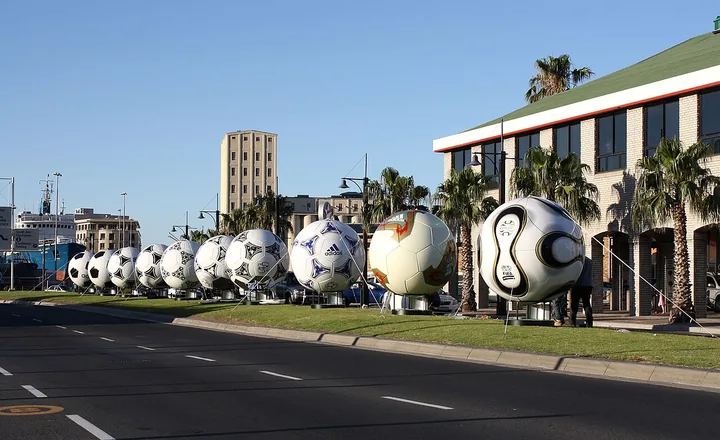
The official World Cup match ball is more than equipment; it is a snapshot of how football’s technology and design have evolved. From the mismatched leather balls of the early days, to the consistent designs that followed Adidas becoming the official supplier in 1970, and on to today’s connected balls with built-in sensors, every innovation reflects the changing shape of the game. This guide traces the ball’s evolution from the Telstar to the Trionda.
Before 1970: Every Host Its Own Ball
Before Adidas began supplying a single official ball, World Cup balls were usually provided by the host nation, and their quality, weight and feel varied with no shared standard. Most were made of brown leather, which was hard to pick out on black-and-white television. That inconsistency paved the way for later standardisation.
The Telstar: A Classic of the Television Age
At the 1970 Mexico World Cup, Adidas became the official ball supplier for the first time and introduced the Telstar. Its name came from “Television Star”, and its iconic 32-panel design — twelve black pentagons and twenty white hexagons — made the ball rounder and stood out clearly on black-and-white TV. That look proved so influential that it remains what many people picture when they imagine a football.
From the Azteca to Fewer Panels
Adidas kept building an official ball for every World Cup, constantly refining materials and construction. The Azteca at the 1986 Mexico World Cup is regarded as the first fully synthetic World Cup ball, greatly improving water resistance, while the Tricolore at France 1998 was the first multi-coloured World Cup ball. In the new century, balls began using fewer, thermally bonded panels: the Teamgeist of 2006 had fourteen panels, and the Jabulani at South Africa 2010 was cut to just eight — though its unpredictable flight drew complaints from players and goalkeepers.
The Connected-Ball Era: From Telstar 18 to Al Rihla
The two most recent tournaments ushered in the “connected ball” era. The Brazuca at Brazil 2014 used six panels and was the first World Cup ball named by a public vote; the Telstar 18 at Russia 2018 revived the original look and carried an embedded NFC chip. The Al Rihla at Qatar 2022 went further, housing an inertial measurement unit (IMU) sensor that fed data to the video assistant referee (VAR) in real time to help with calls such as offside. For 2026, the official ball Trionda continues that tradition, still pushing on structure and officiating technology — the ball moving steadily toward being more visible, more stable and smarter.
FAQ
Q: When did Adidas become the World Cup ball supplier?
A: Since the 1970 Mexico World Cup, and Adidas has made the official ball for every World Cup since.
Q: Why is the 1970 Telstar so iconic?
A: Its 32 black-and-white panels made it easy to see on black-and-white television, and that look became the archetypal image of a football.
Q: What recent tech has appeared in World Cup balls?
A: The Telstar 18 (2018) carried an NFC chip, while the Al Rihla (2022) housed a sensor feeding real-time data to VAR to assist decisions.
Explore more in our World Cup column, or view the full fixtures and results page.