

Zico Profile: Flamengo Legend and the Greatest World Cup Nearly-Man
After Pelé, Brazilian football produced another iconic number 10 revered by fans around the world — Zico. A technically gifted attacking midfielder famous for his pinpoint free-kicks, expansive vision and deadly finishing, he went to three World Cups without ever lifting the trophy and is widely regarded as one of the greatest players never to win it. This profile revisits his verifiable career, club achievements and legacy.
A Talent from Rio
Born Arthur Antunes Coimbra on 3 March 1953 in Rio de Janeiro, Zico began his professional career at Flamengo in 1971 and quickly became the team’s focal point thanks to his superb touch and eye for goal. Not physically imposing, he made up for it with delicate technique and control of a match’s rhythm, soon being seen as the most representative Brazilian talent since Pelé.
Flamengo’s Golden Era
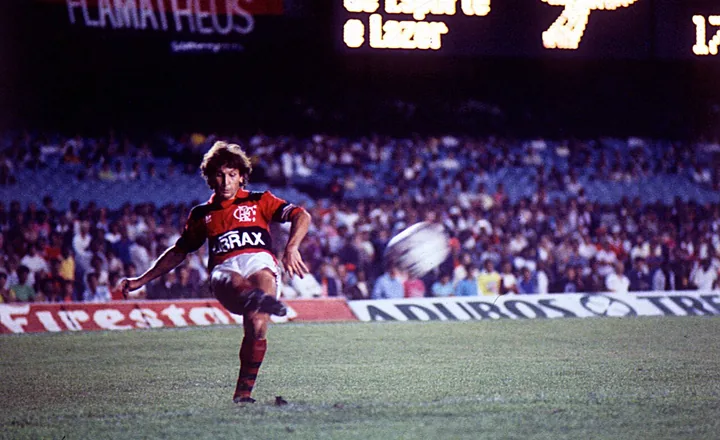
Zico devoted the most glorious years of his career to Flamengo, making over 200 appearances and scoring more than 120 goals to become the club’s greatest ever player. 1981 was Flamengo’s peak: they won the Copa Libertadores for the first time and then beat European champions Liverpool in the Intercontinental Cup (Toyota Cup) to be crowned the best club side in the world. In the early 1980s Zico also helped the Rubro-Negro win multiple Brazilian championships.
Three World Cups and the “Nearly-Man”
Zico represented Brazil at the 1978, 1982 and 1986 World Cups, scoring 48 goals in 71 caps to rank among Brazil’s all-time top scorers. The 1982 side featuring Zico, Sócrates and Falcão captivated fans with its flowing attacking football, only to be eliminated by Italy in the second group stage — remembered as one of the greatest teams never to win the World Cup. Falling short three times made Zico football’s most famous “nearly-man”.
From Italy to Japan
In 1983 Zico moved to Udinese in Italy’s Serie A, spending two seasons there and showing the efficiency of an elite scorer. Late in his career, in 1991, he travelled to Japan to join Sumitomo Metal — later renamed Kashima Antlers — lending his star status to the launch of the J.League and helping the club win a stage title in its inaugural season before retiring in 1994. He is thus regarded as an important driver of Japanese football’s modernisation.
Style and Legacy
An attacking midfielder, Zico was the classic number 10 who combined playmaker and goalscorer in one. His free-kicks were exceptional, ranking among the best of his generation for direct goals, and his passing vision and finishing were equally sharp. Because his style and gifts echoed his great predecessor, he was nicknamed the “White Pelé”. Despite never winning the World Cup, Zico remains widely acknowledged as one of the finest attacking midfielders in football history.
FAQ
How many World Cups did Zico play in? Three — the 1978, 1982 and 1986 tournaments — but he never won any of them.
Which was Zico’s main club? Flamengo, where he made over 200 appearances and scored more than 120 goals, winning the Copa Libertadores and the Intercontinental Cup in 1981.
Why is Zico called a “nearly-man”? He went to three World Cups without winning; the 1982 Brazil team in particular is hailed as one of the greatest never to lift the trophy.
Further reading: browse more legends in our player profiles section; for the 2026 World Cup schedule, visit the fixtures page.