


Catenaccio Explained: The Origins, Peak and Legacy of Italy’s Defensive Art
When it comes to defensive football taken to its extreme, Catenaccio is a name impossible to ignore. The Italian word means “door-bolt,” and it describes a tactical system built around airtight defending and rapid counter-attacks. It swept through Italy in the 1950s and 1960s, shaping the image of the “Italian defensive art” and leaving a lasting echo across world football. This article presents only widely verifiable facts, tracing the origins and historical standing of Catenaccio.
From the Swiss “Door-Bolt” to Italy
The roots of Catenaccio trace back to 1930s Switzerland. Austrian coach Karl Rappan, while managing Swiss sides, devised a defensive system called the verrou (“door-bolt”), which emphasised dropping deep and keeping numerical security at the back. In the 1950s, Italian coaches reshaped Rappan’s ideas into something more structured and even more defensive, gradually evolving it into Catenaccio. It did not appear from nowhere, but was the accumulated result of defensive thinking crossing borders.
The Core Structure: The Sweeper and Man-Marking
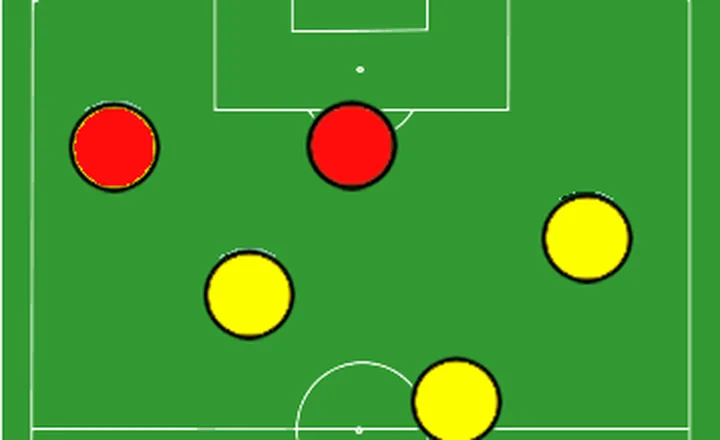
Catenaccio’s most recognisable feature is the extra defender stationed behind the back line — the sweeper (libero, meaning “free man”). The defenders ahead man-mark the opposing forwards, while the sweeper marks no one in particular, instead protecting the space behind, covering gaps and mopping up danger. This two-layer “man-marking plus insurance” structure greatly strengthened defensive solidity, and let teams switch quickly from defence to attack once they won the ball.
Herrera and “La Grande Inter”
The Argentine coach Helenio Herrera pushed Catenaccio to its peak in the 1960s. Before him, the Italian coach Nereo Rocco had already introduced the sweeper role and reinforced defences at clubs such as Triestina and AC Milan. Herrera’s Inter Milan, famed for its rock-solid defence and lethal counters, won multiple Serie A titles and lifted the European Cup in two consecutive years, 1964 and 1965. This team, known as “La Grande Inter,” became the most successful embodiment of Catenaccio and made Herrera a pivotal figure in tactical history.
Tactical Philosophy and Controversy
Catenaccio held “don’t concede first” as its highest principle, seeking victory through minimal error. Admirers saw it as a model of discipline and efficiency; critics called it overly conservative and a sacrifice of entertainment. Whatever the verdict, it proved that tightly organised defending is itself an art, and pushed later coaches to keep searching for a balance between attack and defence.
Historical Influence and Legacy
Catenaccio deeply shaped Italy’s defensive tradition, and the “sweeper” role it popularised endured for many years. Although pure Catenaccio is now rare — as offside laws evolved and collective pressing rose — its emphasis on defensive organisation, zonal protection and counter-attacking efficiency remains part of many teams’ tactical thinking. Understanding this system helps fans pay closer attention to a team’s defensive shape and its transitions.
FAQ
Q: What does Catenaccio mean? A: In Italian it means “door-bolt,” referring to a system built on tight man-marking, a protecting sweeper and fast counter-attacks.
Q: Who invented Catenaccio? A: Its conceptual root was the “door-bolt” system devised by Austrian coach Karl Rappan in Switzerland, later developed by Italian coaches such as Nereo Rocco and Helenio Herrera.
Q: Which team made Catenaccio famous? A: Helenio Herrera’s Inter Milan (“La Grande Inter”), which won multiple Serie A titles and back-to-back European Cups in 1964 and 1965.
For more tactics and rules explainers, browse our analysis section, or see the full fixtures and results page.