The FIFA World Cup Trophy: Design, History and Facts
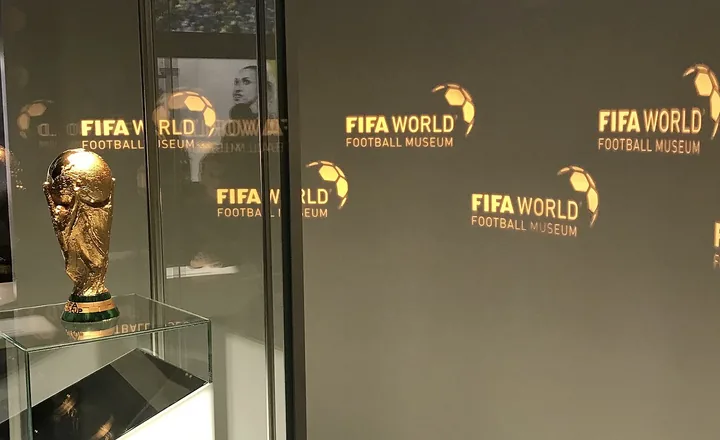
The FIFA World Cup Trophy is the most recognisable prize in football and the ultimate symbol every World Cup winner chases. Most fans know its golden, twin-figure shape on sight, yet fewer know its origins, materials and the quirks behind it. This guide walks through the trophy’s design, history and a few facts worth knowing.
How the Current Trophy Was Born
The trophy we see today was introduced at the 1974 World Cup. It was designed by Italian sculptor Silvio Gazzaniga, who created it while working at the Bertoni workshop. Gazzaniga said he wanted to capture an athlete’s exertion, dynamism and joy at the moment of victory. The piece replaced the earlier Jules Rimet Trophy and became the emblem of a new World Cup era.
Design and Materials
The trophy is made of 18-carat gold, stands about 36.8 centimetres tall and weighs roughly 6.1 kilograms including the base. The base, around 13 centimetres in diameter, carries two bands of malachite, lending the trophy a deep green accent. The form shows two athletes holding up the Earth, symbolising the global nature of the game and the upward surge of triumph. That dynamic silhouette is what sets it apart from other sporting trophies.
Winners Don’t Actually Keep It
A common misconception is that the winning team keeps the real trophy forever. After the celebrations, the original returns to FIFA, and the champions receive a gold-plated replica instead. Each winning nation’s name is engraved on the underside of the base. Because that space is limited, the current trophy can hold winners only until around 2038, after which FIFA will need to consider a successor.
Its Predecessor: The Jules Rimet Trophy
Before this trophy, the World Cup used the Jules Rimet Trophy. Originally named “Victory”, it was later renamed to honour FIFA president Jules Rimet, who helped bring the World Cup to life. Under the old rules, the first nation to win three titles could keep the trophy permanently — Brazil did so after their third triumph in 1970. Sadly, that historic trophy was later stolen in Brazil and has never been recovered, one of football’s enduring mysteries.
Why It Is Football’s Ultimate Symbol
The trophy’s weight lies not only in its gold and malachite but in the honour and stories it holds. Lifting it means a team has reached the very summit of world football. For players it is the highest dream of a career; for fans it is an emotional anchor every four years. Knowing the story behind the trophy helps you feel the full significance of that championship moment.
FAQ
Q: Do winners keep the real World Cup trophy?
A: No. The original returns to FIFA after the tournament, and the team keeps a gold-plated replica.
Q: When was the current trophy introduced?
A: In 1974, designed by Italian sculptor Silvio Gazzaniga.
Q: Is the trophy solid gold?
A: The body is 18-carat gold, with two bands of malachite on the base; it weighs about 6.1 kg including the base.