Iran World Cup Team Ordered to Leave US Within Hours of Each Match
The Iran World Cup campaign has been overshadowed by an off-pitch row: United States officials have confirmed that Iran’s national team must leave the country within hours of the full-time whistle at its group games in Los Angeles and Seattle, returning to its training base in Mexico. The arrangement drew sharp criticism immediately after Team Melli’s opening fixture.
What happened after Iran’s opening match
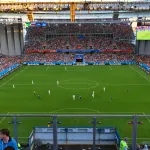
According to the Associated Press, Iran drew 2-2 with New Zealand on June 15 at the Los Angeles Stadium (SoFi Stadium) in Inglewood, in a politically charged Group G clash. Elijah Just scored twice for New Zealand, while Ramin Rezaeian and Mohammad Mohebi (64th minute) replied for Iran. Yet instead of staying overnight in California to recover, the squad was told to board a plane almost immediately for the roughly 140-mile trip back to Tijuana. “They didn’t even give us time to recover,” coach Amir Ghalenoei said through an interpreter, adding that his side was “perhaps the most oppressed in the World Cup.”
The US explanation and the visa dispute
Andrew Giuliani, executive director of the White House FIFA Task Force, pushed back: “We were clear this was the process.” He said the team could enter the day before a match and had to leave the evening the match wrapped up, in both Los Angeles and Seattle. On the denied visas for some team officials and support staff, Giuliani pointed to Secretary of State Marco Rubio’s stance that anyone with direct ties to Iran’s Islamic Revolutionary Guard Corps (IRGC) would not be admitted. Winger Mehdi Torabi’s visa expired after the first game, but officials confirmed he was issued a new multiple-entry visa, with the State Department saying “this issue has been resolved.”
Iran’s grievances and FIFA’s role
Captain Mehdi Taremi said the short trip from Tijuana to Los Angeles took about five hours because of travel and security checks, and called on the governing body for more support: “I think FIFA have to help us more than this.” Ghalenoei blamed several in-game cramps and substitutions on the lack of adjustment and recovery time rather than tactical reasons. The backdrop matters: Iran’s World Cup cycle has been in upheaval since the US-Israel military action against Iran began in late February 2026, and the team ultimately chose to compete after FIFA rejected its request to move its three group matches out of the US. Inside SoFi Stadium, a large, conflicted Iranian-American crowd created a fierce home-like atmosphere.
What it means for Iran World Cup qualification hopes
Iran next face Belgium in Inglewood on Sunday before traveling to Seattle to play Egypt. With all four Group G sides level on one point after the opening round, the qualification picture is tight, and the repeated cross-border travel adds a logistical burden few rivals face. Whether this is purely a visa-and-security procedure or carries a heavier political charge depends on who you ask, but it has become a real window into how the 2026 World Cup operates against a tense geopolitical backdrop. Readers can pair this with our earlier coverage of World Cup fan visa denials and follow the latest live scores and fixtures for updates.